The basics of Force Sensing Resistor technology — construction, operation, and design considerations.
Download FSR 101 Guide (PDF) →
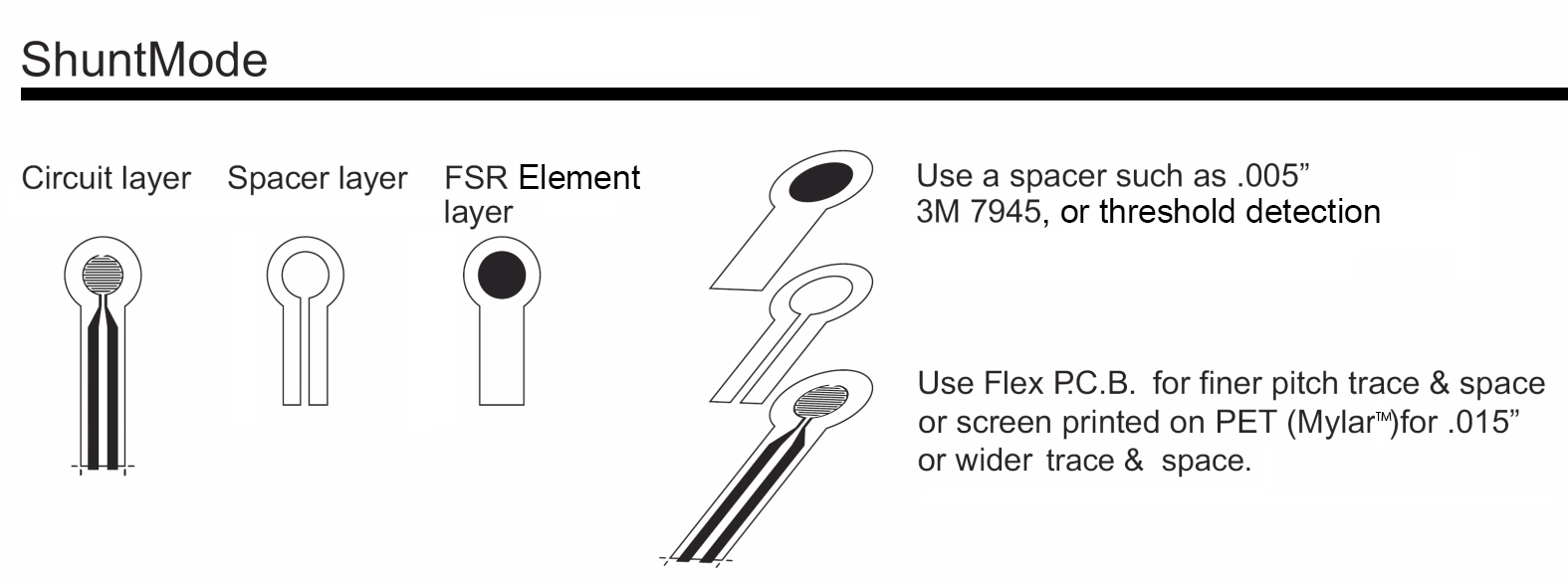
Force-sensing resistor (FSR) inks are typically screen printed and cured on a Mylar™ film. Two basic FSR configurations are the "ShuntMode™" and "ThruMode™".
ShuntMode FSRs are made by screen printing silver conductive interdigitated finger patterns on one film and an FSR element on the other, then facing them toward each other.
ThruMode devices are constructed by screen printing a solid conductive pad on each substrate overprinted with an FSR element, which are faced toward each other.
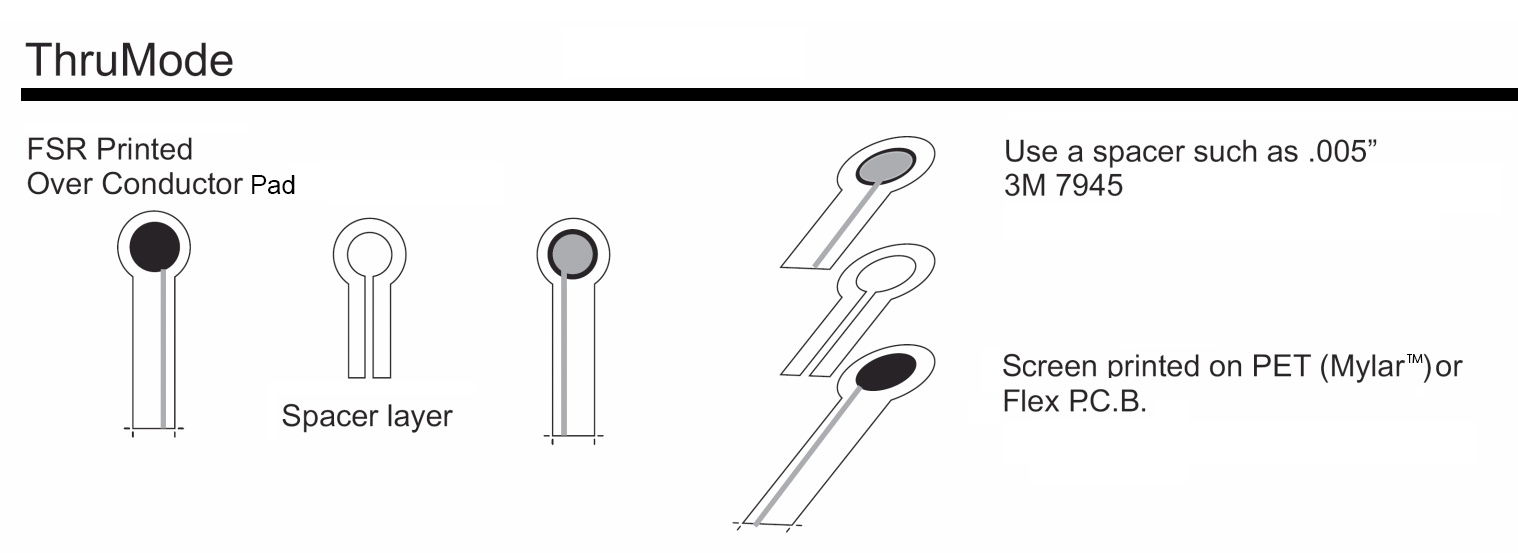
As with a typical membrane switch, the two substrates can be spaced apart using various thicknesses of spacer material. The spacer height, inside diameter, open area, and thickness of the deflecting film mechanically determine the amount of force required for the two surfaces to come into contact.
For comprehensive FSR theory and application guidance, download our FSR 101 Guide (PDF). For hands-on tutorials, visit our Tutorials page.
Whether you need a custom sensor design, engineering consultation, or production-ready components — we're here to help.
Contact Sensitronics →